Last verified: August 16, 2026 | Part 6 of the Global Micromobility Law Series
If you’re trying to make sense of e-bike laws in India in 2026, here’s the one thing to check before anything else: it isn’t the price tag or the marketing copy that decides whether your e-scooter or e-bike needs a licence plate — it’s three numbers most buyers never look at. Motor power, top speed, and weight. Get all three under the legal threshold and you’re riding what the law treats as a bicycle. Cross just one of them, and you’re riding an unregistered motor vehicle, whether you realise it or not.
India didn’t just join the electric two-wheeler race — it became the track. In 2026, India overtook China to become the world’s largest two-wheeler market overall, and its electric segment is growing quickly alongside it: 1.3 million electric two-wheelers were sold in the country in 2024, per the International Energy Agency, already 6% of India’s total two-wheeler market. That scale is exactly why the country needed its own entry in this series rather than being folded into our Asia roundup: India’s rules, incentives, and enforcement gaps are distinct enough — and change often enough — to deserve a dedicated look.
E-Bike Laws India 2026 — The National Baseline
Unlike the USA’s three-class system or the EU’s single 250W/25km/h standard, India draws its line under the Central Motor Vehicles Rules (CMVR) around what’s informally called a “low-speed electric vehicle” (LSEV). A two-wheeler qualifies for the light-touch category only if it meets all three of these limits at once:
| Requirement | Limit | Exceed it and… |
|---|---|---|
| Motor power | 250W maximum | Registration required |
| Unladen weight | 60kg maximum | Registration required |
| Top speed | 25 km/h maximum | Registration required |
Stay within all three and your e-scooter or e-cycle is treated like a bicycle: no RTO registration, no number plate, no driving licence, and — legally — no mandatory helmet, though we’d still recommend wearing one. Break any single limit and the vehicle falls under the Motor Vehicles Act like any other motorized two-wheeler.
E-Bike Laws India 2026 — When You Cross Into “Motor Vehicle” Territory
Once a two-wheeler exceeds 250W, 25 km/h, or 60kg, the rules stop being e-bike-specific and become standard motor vehicle rules:
- Registration: Full RTO registration with a green number plate (the standard marker for electric vehicles in India)
- Licence: A valid motor vehicle driving licence is mandatory; learners must display an L-board
- Helmet: Mandatory for rider (and, per general Motor Vehicles Act rules, pillion); non-compliance typically carries a fine
- Minimum age: Standard two-wheeler licensing age requirements apply
E-Bike Laws India 2026 — The Enforcement Gap
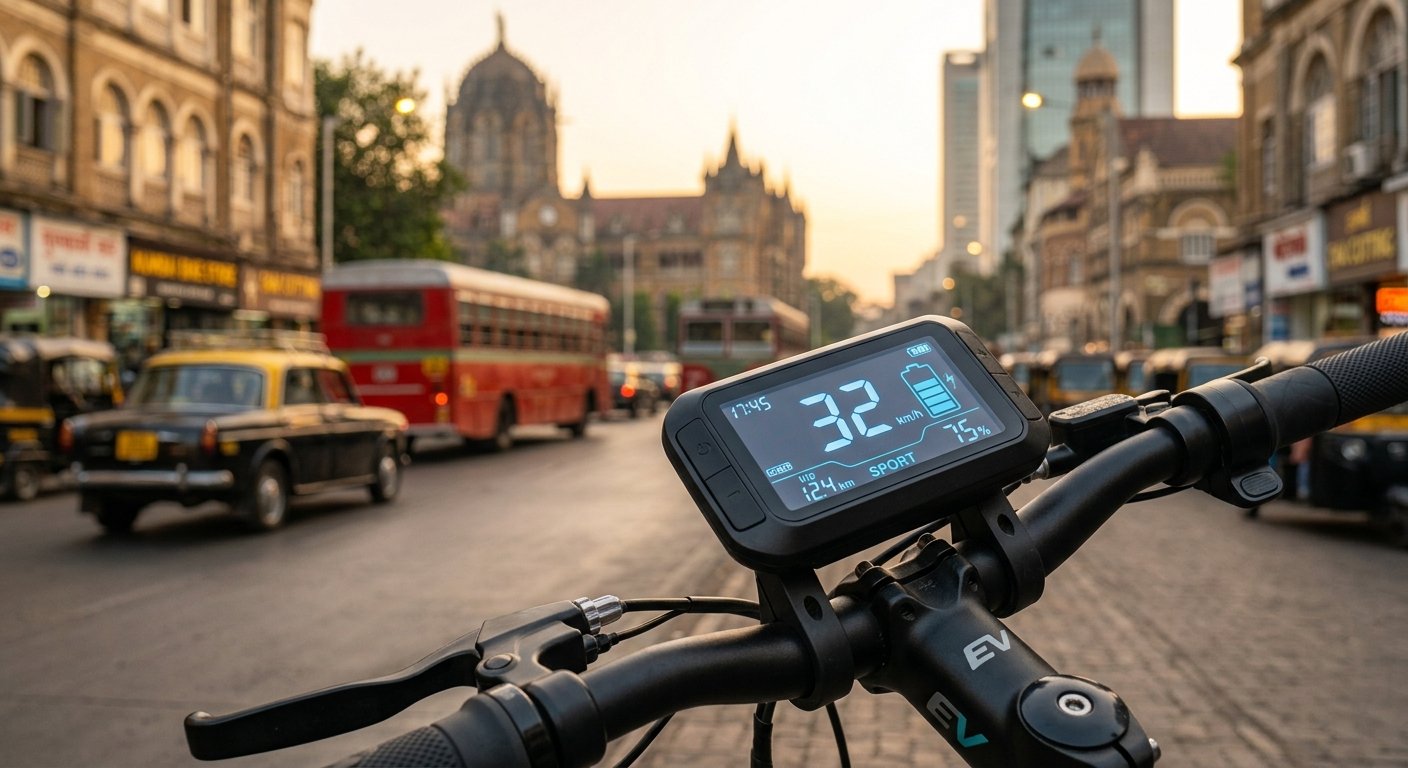
Here’s the wrinkle regulators are grappling with: a meaningful share of “low-speed” e-scooters sold in India are reportedly capable of far more than 25 km/h once a limiter is bypassed or a controller is swapped — sold compliant, ridden non-compliant. Industry voices have warned that simply raising the official power and weight caps without tightening enforcement risks retroactively legitimising vehicles that were never really operating within the rules to begin with.
E-Bike Laws India 2026 — The PM E-DRIVE Subsidy, Explained
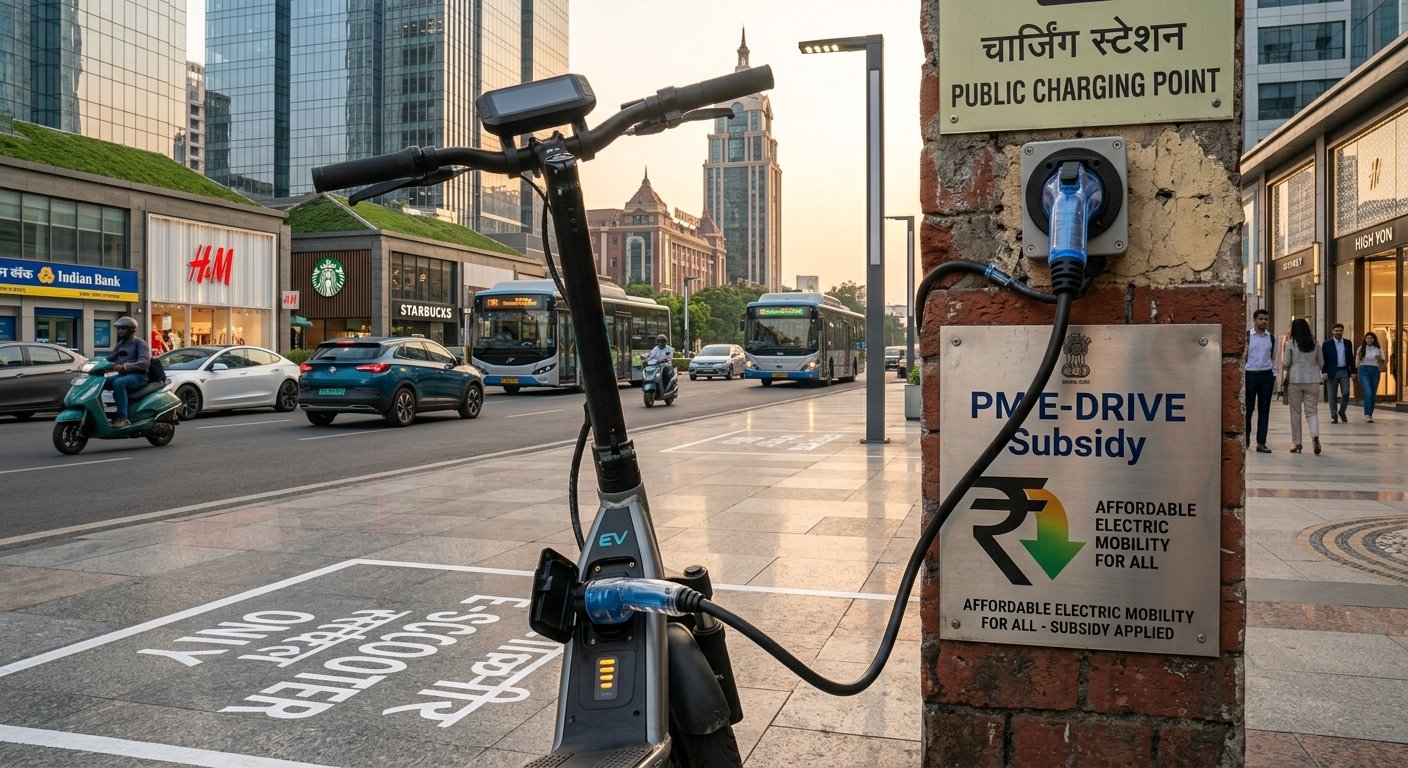
India’s central purchase incentive for electric two-wheelers runs through the PM E-DRIVE scheme (Prime Minister’s Electric Drive Revolution in Innovative Vehicle Enhancement), administered by the Ministry of Heavy Industries. It’s paid per kWh of battery capacity, capped per vehicle:
| Period | Rate | Cap per vehicle |
|---|---|---|
| Oct 2024 – Mar 2025 | ₹5,000 per kWh | ₹10,000 |
| Apr 2025 – present | ₹2,500 per kWh | ₹5,000 |
To qualify, the electric two-wheeler must carry an advanced/certified battery and have an ex-factory price at or below ₹1.5 lakh.
The scheme’s terminal date for e-2Ws was originally set for 31 March 2026. It was administratively pushed to 31 July 2026 as that deadline approached — and then, via the gazette amendment notification dated 10 August 2026 mentioned at the top of this article, the government extended e-2W eligibility all the way to 31 March 2028, with roughly ₹1,000 crore in additional funding earmarked specifically for two-wheelers (raising the e-2W allocation from about ₹1,772 crore to ₹2,767 crore).
What This Means If You Own or Want to Buy an E-Bike or E-Scooter in India
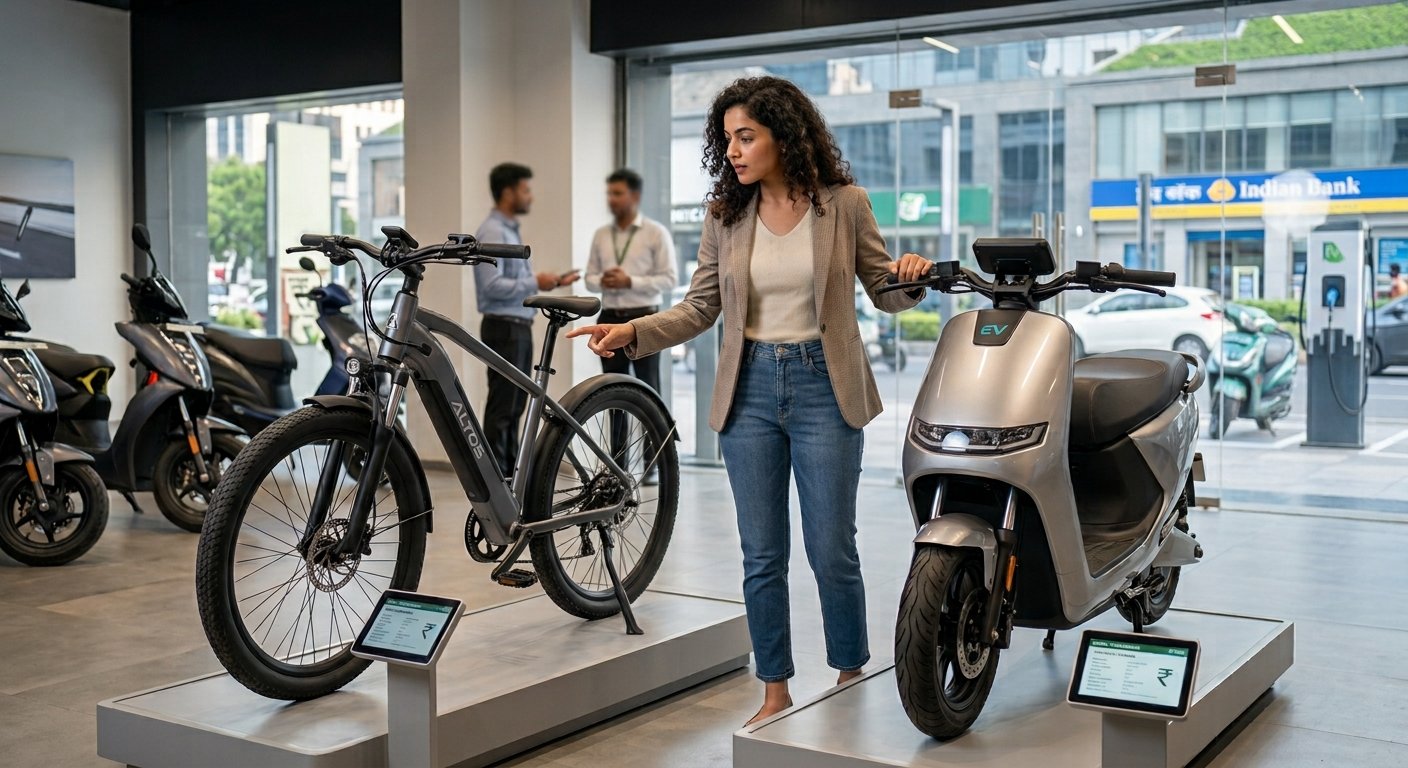
- Check the spec sheet, not the marketing copy. “No registration needed” only holds if motor power, weight, and top speed all fall within CMVR limits — confirm all three, not just the one the seller highlights.
- If it needs registration, budget for the full process. Green number plate, valid licence, and helmet aren’t optional extras — they’re the law once you’re over any of the three thresholds.
- Layer your incentives correctly. Central PM E-DRIVE subsidy and state-level road tax waivers/subsidies are usually separate programs — check both, since eligibility rules differ.
- Don’t assume the subsidy is gone. As of August 2026 it’s been extended to March 2028 — verify current rates on the PM E-DRIVE portal rather than relying on outdated headlines.
Our Take — Is India Getting This Right?
India’s low-speed exemption is a reasonable way to keep basic e-mobility accessible without RTO friction — but the enforcement gap is real, and regulators reviewing whether to loosen the power and weight caps are walking a line between accommodating genuinely low-speed vehicles and rubber-stamping ones that were never really compliant. The bigger structural win is the PM E-DRIVE extension: a scheme that keeps subsidy support running through 2028, even at a reduced rate, gives manufacturers and buyers the kind of multi-year certainty that a series of short renewals never quite manages. Given India’s scale — now the world’s largest two-wheeler market outright — how this settles will likely shape how other large, price-sensitive markets structure their own e-mobility rules.
E-Bike Laws India 2026 — FAQ
Do I need a licence to ride an e-scooter in India?
Not if it stays within the low-speed limits: 250W motor power or less, 25 km/h top speed or less, and 60kg unladen weight or less. Exceed any of those and you need a valid motor vehicle driving licence.
Do I need to register my e-bike or e-scooter in India?
Only if it exceeds 250W motor power, 25 km/h top speed, or 60kg unladen weight. Vehicles within all three limits are exempt from RTO registration.
Is a helmet mandatory for e-scooter riders in India?
Legally mandatory only above the low-speed thresholds. Below them, helmets aren’t required by law, though wearing one is still the safer choice.
Is the PM E-DRIVE subsidy for electric two-wheelers still active in 2026?
Yes. As of a 10 August 2026 gazette amendment, the scheme was extended to 31 March 2028 for e-2Ws, at ₹2,500 per kWh capped at ₹5,000 per vehicle, with additional funding allocated specifically for two-wheelers.
How much is the PM E-DRIVE subsidy for e-scooters?
Currently ₹2,500 per kWh of battery capacity, capped at ₹5,000 per vehicle, for eligible e-2Ws priced at or below ₹1.5 lakh ex-factory with a certified advanced battery. This is a reduction from the original ₹5,000/kWh (₹10,000 cap) rate that applied from October 2024 to March 2025.
Can a “no registration” e-scooter in India legally go faster than 25 km/h?
No. If it exceeds 25 km/h (or 250W power, or 60kg weight), it no longer qualifies for the low-speed exemption and must be registered like any other motor vehicle, regardless of how it was marketed or sold.
This article is for informational purposes only. E-mobility laws in India change frequently at both the national and state level. Always verify current requirements with the Ministry of Road Transport and Highways (MoRTH), your state RTO, or the official PM E-DRIVE portal before riding or purchasing.
Last verified: August 16, 2026. eMobilityNow will update this article as India’s CMVR power and weight cap review, and the PM E-DRIVE eligible-model list, evolve.