E-Bikes & E-Scooters, Laws & Regulations / Fortis
Last verified: August 8, 2026 | Part 5 of the Global Micromobility Law Series
Europe’s e-bike and e-scooter law is a patchwork built on top of one shared technical standard — every country disagrees about the road rules, but they all start from the same EN 15194 definition of what an e-bike actually is. Asia doesn’t have that shared starting point at all. There’s no regional bloc writing a common technical baseline the way the EU does. Each country has built its own framework from scratch, and the results aren’t just different in degree — they’re different in kind.
Japan treats a standard e-bike as an ordinary bicycle, full stop, but splits e-scooters into two entirely separate legal categories depending on speed. China has made the e-bike a genuine piece of national infrastructure, regulated down to the percentage of fire-resistant plastic allowed in its construction — while simultaneously banning free-standing kick scooters from the roads of its two largest cities. South Korea treats an e-scooter almost exactly like a motorcycle, requiring a license and tracking violations against your regular driving record. And Singapore runs what might be the most precisely bureaucratic micromobility system anywhere on Earth, splitting devices into three separate legal categories with three separate certification standards.
This guide to e-bike laws Asia 2026 covers what’s actually legal in each of these four markets, and why they ended up so different from each other. It picks up where the rest of the Global Micromobility Law Series left off — after Canada, Australia, the USA, and Europe.
Why E-Bike Laws Asia 2026 Don’t Share a Framework
Europe’s patchwork exists on top of agreement about the fundamentals — every EU country accepts the same technical definition of what makes an e-bike an e-bike, even while disagreeing sharply about license plates and helmet rules. Asia never had that starting point to build from. There’s no equivalent to the EU here: no regional authority writing a shared technical standard that individual countries then layer national traffic law on top of. Japan, China, South Korea, and Singapore each built their regulatory frameworks independently, often decades apart, in response to entirely different local pressures — Japan responding to a centuries-old bicycle culture and a recent spike in accidents, China responding to the sheer scale of e-bikes as basic urban transport for hundreds of millions of people, South Korea responding to a rapid, largely unregulated boom in rental scooters, and Singapore responding to a series of high-profile PMD fires that made battery safety a national political issue.
The result is that e-bike laws Asia 2026 riders actually face aren’t a regulatory patchwork in the European sense — variations on a shared theme. It’s four genuinely different philosophies about what a micromobility device even is, sitting next to each other with almost nothing in common except the fact that all four are trying to solve the same underlying problem: more people on powered two-wheelers, sharing space with pedestrians, cyclists, and cars.
Japan E-Bike Laws: One Vehicle, Two Legal Worlds
Japan’s approach starts from a genuinely different premise than anywhere else in this guide: a standard e-bike isn’t a special category at all. It’s simply a bicycle. Japan’s home-market e-bikes — pedal-assist only, no throttle, the kind sold as 電動アシスト自転車 — fall entirely under the Road Traffic Act’s ordinary bicycle rules. Every rule that applies to a regular cyclist applies to an e-bike rider in exactly the same way: same fines, same required road positioning, same everything. The motor doesn’t change your legal status at all.
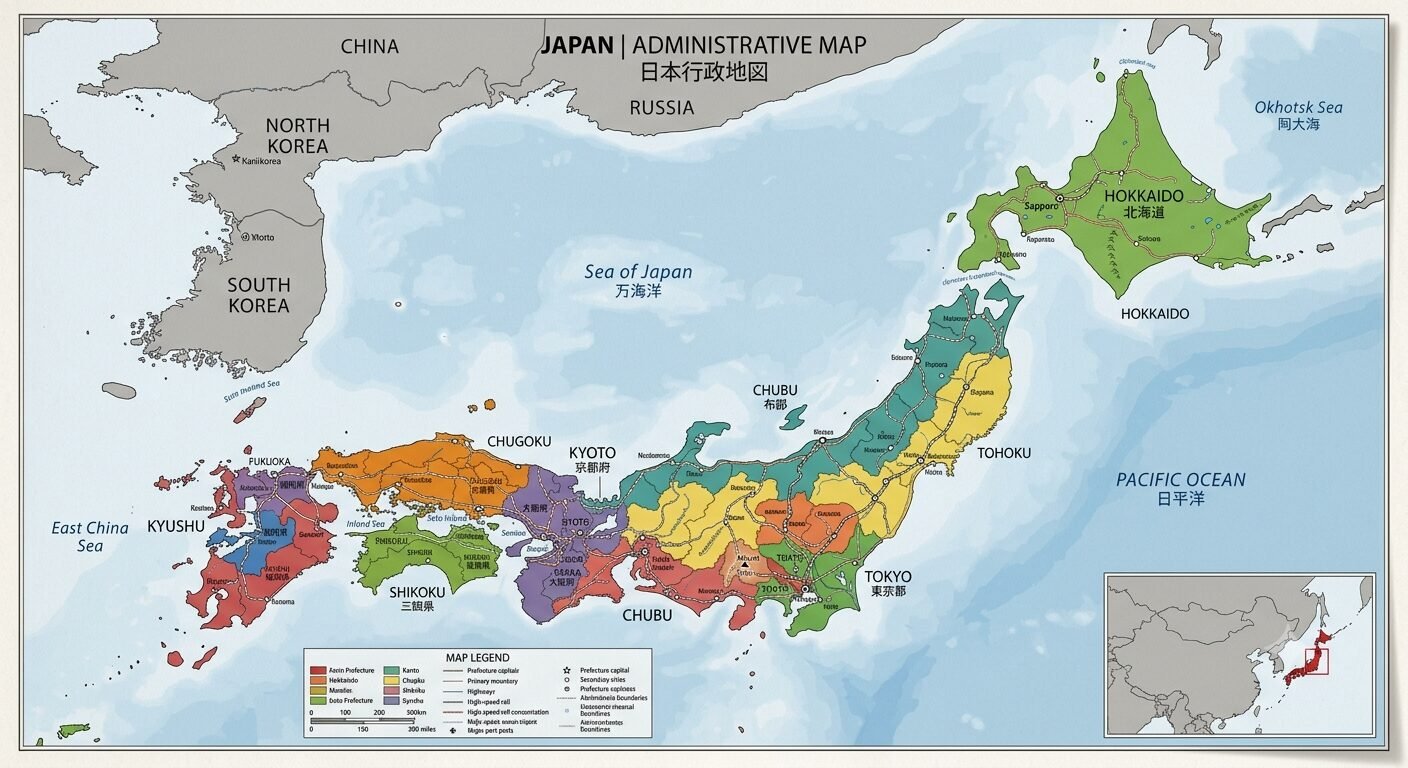
That includes a significant recent change. On April 1, 2026, Japan rolled out what’s become known as the “Blue Ticket” system — not a new law exactly, but a fundamental shift in how existing bicycle rules get enforced. Before this year, police mostly limited themselves to verbal warnings for minor infractions, reserving serious penalties for major violations like riding drunk. Now, officers can issue an on-the-spot fine for infractions that used to earn nothing more than a warning — using a phone while riding costs ¥12,000, riding against traffic costs ¥6,000, and the list covers dozens of specific behaviors. Because e-bikes are legally bicycles, every one of these fines applies to e-bike riders exactly as it applies to anyone on a regular bike.
E-scooters tell an entirely different story, and this is where Japan’s system gets genuinely more complex than a simple “e-bikes are fine, scooters are strict” summary would suggest. Since a 2023 revision to the Road Traffic Act, e-scooters that stay within specific limits — a maximum speed of 20 km/h and a motor output no greater than 0.6 kW — qualify for a category called “Specified Small Motorized Bicycles.” Riders in this category need to be at least 16, but critically, they don’t need a driver’s license at all. Some approved models also include a low-speed mode capped at 6 km/h specifically so they can be legally ridden on sidewalks where riding on the road isn’t practical. Scooters that exceed those limits fall into a completely different legal bucket — full “motorized bicycle” status, the same category as a moped, which brings a driver’s license requirement, a mandatory helmet, a license plate, and compulsory insurance, with sidewalk riding banned outright under any circumstances.
One detail worth understanding clearly: the Blue Ticket enforcement system that reshaped bicycle policing in April 2026 doesn’t apply to e-scooters at all. They run under their own, separate enforcement structure — meaning Japan effectively has three distinct rulebooks operating simultaneously: one for bicycles and compliant e-bikes, one for license-free “specified small” e-scooters, and one for everything else that gets treated as a moped.
China E-Bike Laws: The World’s Largest Market, With a Hard Line Against Scooters
No country in this guide treats the e-bike as more central to everyday life than China, and no single market does more to shape what e-bike laws Asia 2026 actually look like in practice. It’s the largest e-bike market in the world by a wide margin, and the regulatory approach reflects that — China doesn’t treat e-bikes as a niche transport category to be managed cautiously, it treats them as core infrastructure to be engineered rigorously.

The current governing standard is GB 17761-2024, which came fully into force on September 1, 2025, with a hard cutoff on December 1, 2025 after which e-bikes built to the older 2018 standard could no longer legally be sold at all. The technical requirements go well beyond a simple speed cap, though there is one: the motor must cut off at 25 km/h. Beyond that, the standard specifies maximum vehicle weight depending on battery chemistry (63 kg for lead-acid models), caps non-fire-resistant plastic at no more than 5.5% of the bike’s total weight specifically to reduce fire risk, and requires anti-tampering design intended to make it genuinely difficult for owners to remove the speed limiter after purchase. Every compliant e-bike needs a China Compulsory Certificate (CCC), and as of the new standard, batteries and chargers require their own separate CCC certification on top of the bike itself. One notable change from the previous standard: pedals are no longer mandatory on every model — except for e-bikes used commercially, such as for urban delivery or rental fleets, which still must have them.
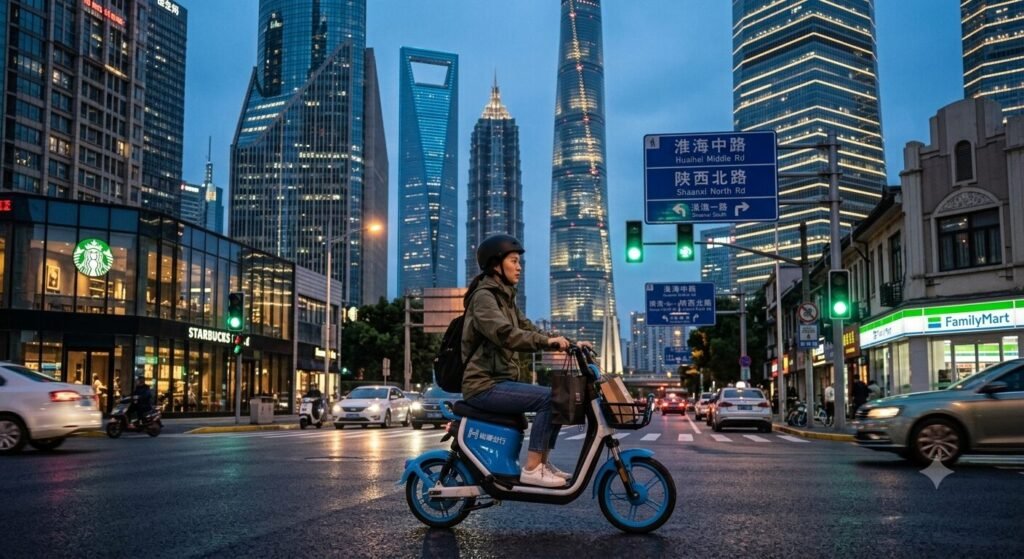
Where China draws a genuinely hard line is on standalone electric kick scooters and self-balancing devices — the category that dominates European city streets is, by contrast, effectively locked out of Chinese roads entirely. Beijing and Shanghai have banned electric scooters and similar devices from public roads for years, and Beijing’s revised regulations, which took effect May 1, 2026, explicitly reaffirm that scooters and self-balancing vehicles remain prohibited from road use — grouped in the same restricted category as unregistered devices generally. Riders caught using one on a public road face only a modest fine by international standards, but the underlying message is unambiguous: in China’s two largest cities, and in practice across most of the country, the e-bike is the accepted form of powered micromobility, and the kick scooter simply isn’t.
That same May 2026 Beijing update also did something no other country in this guide has done: it made helmets a genuine legal requirement — not a recommendation — for both the rider and any passenger on an e-bike, with warnings or fines for non-compliance. It simultaneously raised the maximum age for a child riding as a passenger on the back of an e-bike from 12 to 16, a change explicitly aimed at accommodating the reality of parents using e-bikes for school pickup and drop-off.
South Korea E-Scooter Laws: Almost a Motorcycle
Of the four markets in this guide, South Korea treats the e-scooter with the least ambiguity — and the strictest requirements — of any e-bike laws Asia 2026 covers. Under the Road Traffic Act, e-scooters and similar devices fall under a category called Personal Mobility, or PM, and a comprehensive PM Safety Law passed in December 2025 tightened what was already a fairly strict framework into one of the clearest — and toughest — in the region.
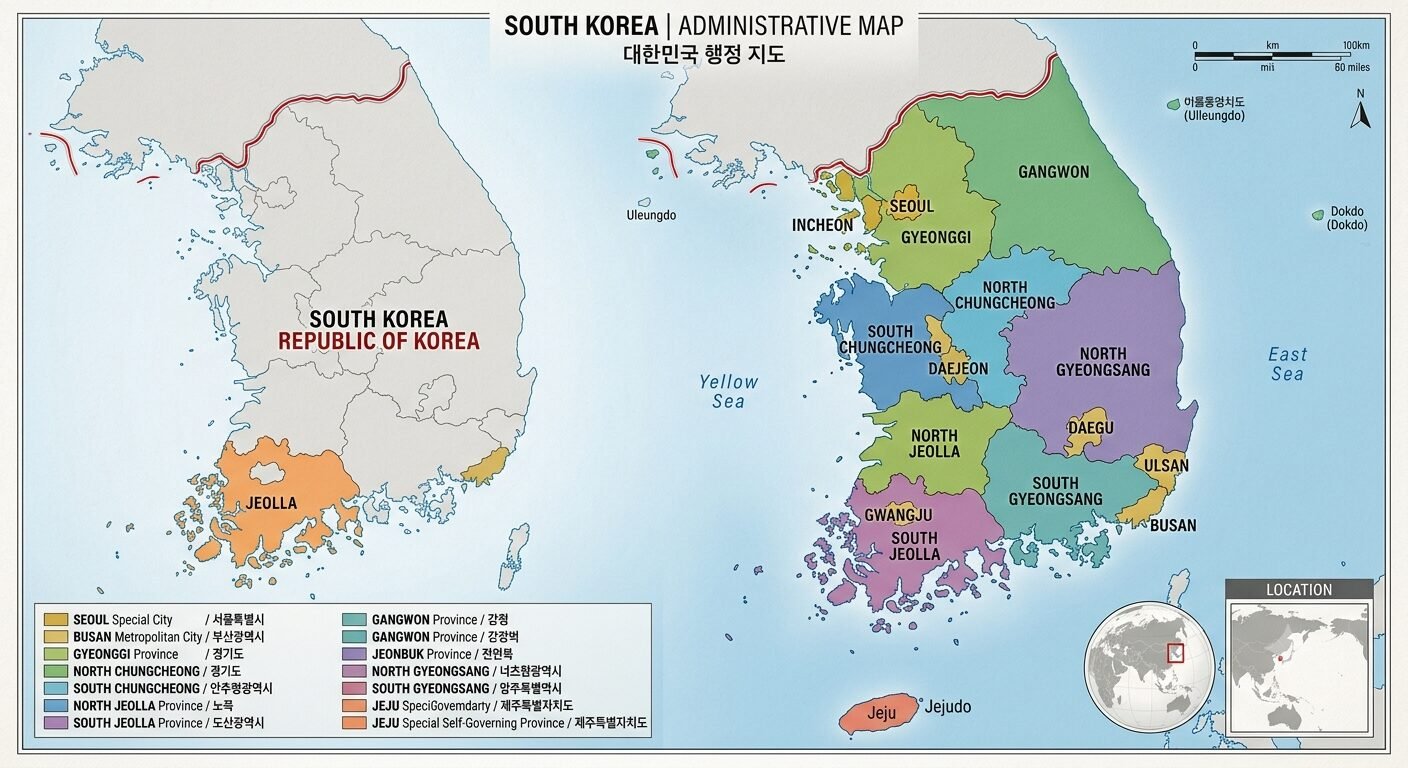
Riding one legally requires, at minimum, a motorized bicycle license (원동기장치자전거면허), available to anyone 16 or older; a full driver’s license also satisfies the requirement. Riding without one carries a fine of up to ₩100,000. The maximum speed allowed is 20 km/h, reduced from 25 km/h in a late-2024 tightening. Helmets are mandatory, with a comparatively modest ₩20,000 fine for skipping one — though real-world compliance has historically been low, with reported helmet-usage rates under 20% despite the requirement being in force since 2021. Riding two-up on a single scooter costs ₩40,000. Sidewalk riding isn’t permitted; scooters belong in bike lanes or at the edge of the road. The new PM Safety Law also introduced mandatory registration for every PM device, with a compliance deadline of March 2026.
The detail that sets South Korea apart from every other country in this guide involves what happens if you’re caught riding under the influence. A DUI-equivalent offense on a PM device carries a fine of up to ₩100,000 — rising to ₩130,000 for refusing a breathalyzer test — but the consequence that actually surprises most riders is that it can suspend or revoke your regular car driver’s license too, exactly as though you’d been caught drunk driving a car. For a foreign resident who exchanged a home-country license for a Korean one, that means an e-scooter incident on a Friday night can genuinely cost you the ability to drive a car the following Monday.
Seoul is also moving to close a gap that’s existed since rental scooters first became popular: as of a proposal placed on public notice in January 2026, rental operators would be legally required to verify that a renter actually holds a valid license before handing over a scooter — something that, remarkably, wasn’t previously mandated at the point of rental, even though riding without one has been illegal the whole time.
Singapore E-Bike and E-Scooter Laws: Three Devices, Three Rulebooks
If Japan’s system surprises people with how relaxed it is toward e-bikes, Singapore’s surprises people with the opposite — it may be the most exactingly regulated corner of e-bike laws Asia 2026 has to offer, anywhere in the world. The starting point for understanding it is recognizing that Singapore’s Land Transport Authority doesn’t treat “e-bike” and “e-scooter” as two points on a spectrum. It treats them as three entirely distinct legal categories, each with its own certification standard, its own registration process, and its own rules about exactly where it’s allowed to go.
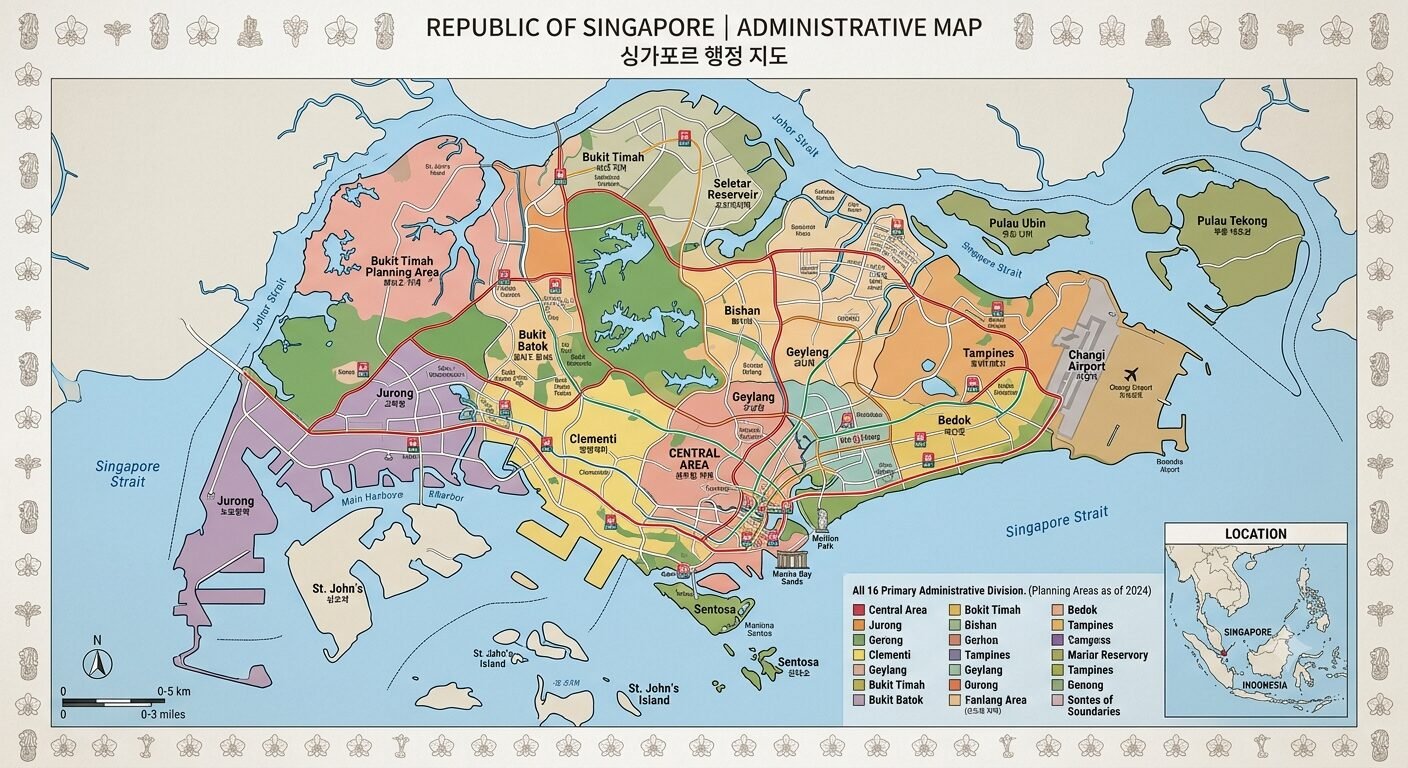
A Power-Assisted Bicycle (PAB) — Singapore’s term for a standard e-bike — has pedals and a motor that assists only while pedaling, cutting off at 25 km/h, certified to the EN 15194 standard used across Europe. A PAB can use the road itself (in the cyclist portion), park connector networks, and shared paths — but never a footpath. A Personal Mobility Device (PMD) — Singapore’s category for a standalone e-scooter — is throttle-only, also capped at 25 km/h, but certified to an entirely different standard, UL2272, focused specifically on fire safety. A PMD can use cycling paths, park connectors, and shared paths, but is barred from public roads entirely — the reverse restriction from a PAB. Both devices must be individually registered with the LTA and re-inspected every two years, and — this is the detail that catches people out — a device certified under one standard isn’t automatically legal under the other. An uncertified PMD can’t even be registered in the first place, which makes riding one unregistered a double offense: illegal to own in that state, and illegal to ride on top of that.
The third category, Personal Mobility Aids (PMAs) — motorized wheelchairs and mobility scooters intended for people who are unable to walk or have significant walking difficulty — is where the newest and strictest rules landed. As of June 1, 2026, the maximum speed for a PMA on a public path dropped from 10 km/h to 6 km/h, roughly brisk walking pace. Most users now need a formal certificate of medical need, obtained through an Assessment for Mobility Scooter, unless they fall under a specific pre-existing exemption category (recipients of certain government mobility-support schemes, for instance). Enforcement officers have been specifically directed to focus on visibly able-bodied riders to identify likely misuse. And in a rule with no real parallel anywhere else in this guide, simply keeping a non-UL2272-certified device — whether or not you ever ride it in public — became its own separate offense from June 2026 onward, carrying fines of up to S$2,000 and potential imprisonment of up to three months, with steeper penalties for repeat offenders and businesses.
E-Bike Laws Asia 2026: The Bottom Line
Pull these four markets together and the pattern that emerges isn’t really a pattern at all — it’s a demonstration of how differently four governments can approach the exact same underlying technology. Japan starts from trust: a compliant e-bike is just a bicycle, full stop, and even its e-scooter framework offers a genuine license-free path for compliant devices. China starts from infrastructure: the e-bike is too economically important to hundreds of millions of daily riders to leave loosely regulated, so it’s engineered and certified almost like a consumer appliance — while the e-scooter, without that same economic weight behind it, gets effectively locked out of two of the country’s largest cities. South Korea starts from risk: an e-scooter is treated close to a motorcycle, with a license requirement and consequences that follow you into your regular driving record. And Singapore starts from precision: rather than one blurry “micromobility” category, it built three separate, exactly-defined legal categories and is still tightening the strictest of the three as of mid-2026.
The practical takeaway for anyone buying, riding, or importing a device across any of these four countries is the same one that closed out the Europe guide: don’t assume what’s legal in one market tells you anything reliable about the next one. Check the current rule for wherever you’re actually riding — and in this region more than any other covered so far, expect that rule to be genuinely different in kind, not just in degree, from the last country you were in.
Next in the Global Micromobility Law Series: the global synthesis — pulling together Canada, Australia, the USA, Europe, and Asia to ask which approach is actually getting this right. Coming soon.
E-Bike Laws Asia 2026: Frequently Asked Questions
Do I need a license to ride an e-bike in Japan?
No. A standard pedal-assist e-bike is legally treated as an ordinary bicycle in Japan, with no license, registration, or insurance required — though it is subject to the same rules and fines as any bicycle, including the stricter enforcement that began April 1, 2026.
Are electric kick scooters legal in China?
It depends entirely on the city. Beijing and Shanghai ban standalone electric scooters and self-balancing devices from public roads outright, a restriction reaffirmed in Beijing’s May 2026 regulatory update. E-bikes, by contrast, are fully legal and heavily used nationwide under the national GB 17761-2024 standard.
Do I need a license to ride an e-scooter in South Korea?
Yes. At minimum, a motorized bicycle license, available from age 16, or a full driver’s license. Riding without one carries a fine of up to ₩100,000, and under South Korea’s PM Safety Law, all devices must also be registered.
What’s the difference between a PAB and a PMD in Singapore?
A PAB is a power-assisted bicycle — it has pedals, a motor that only assists while pedaling, and can use the road. A PMD is a throttle-only e-scooter, certified to a different fire-safety standard, and is barred from public roads but allowed on cycling paths. Both must be individually registered with the LTA.
Can I ride an uncertified e-scooter in Singapore if I only use it at home?
For Personal Mobility Aids specifically, no — as of June 1, 2026, simply owning a non-UL2272-certified device is an offense in Singapore, separate from riding it in public, with fines of up to S$2,000.
Does South Korea treat e-scooter DUI the same as drunk driving?
The direct fine is smaller, but the consequence isn’t: a DUI-equivalent offense on a Personal Mobility device in South Korea can suspend or revoke your regular driver’s license, the same as if you’d been caught driving a car under the influence.
Sources
- Japan National Police Agency — Traffic Rules for Specified Small Motorized Bicycles and the April 2026 “Blue Ticket” enforcement update
- Japan Ministry of Land, Infrastructure, Transport and Tourism — Specified Small Motorized Bicycle framework (2023 revision)
- Standardization Administration of China — GB 17761-2024, Safety Technical Specification for Electric Bicycles
- Beijing Municipal Government — Revised Regulations on the Administration of Non-Motor Vehicles in Beijing (effective May 1, 2026)
- Korea Transportation Safety Authority (Kotsa) — official site, and the Personal Mobility Safety Law (passed December 2025)
- Singapore Land Transport Authority (LTA) — Rules & Code of Conduct for PAB, PMD, and PMA devices